The Cards
Every data card we post carries the money2069.org mark — so every one of them is archived here, next to the post it shipped in. The site the cards point to should hold the cards. Receipts, not claims.
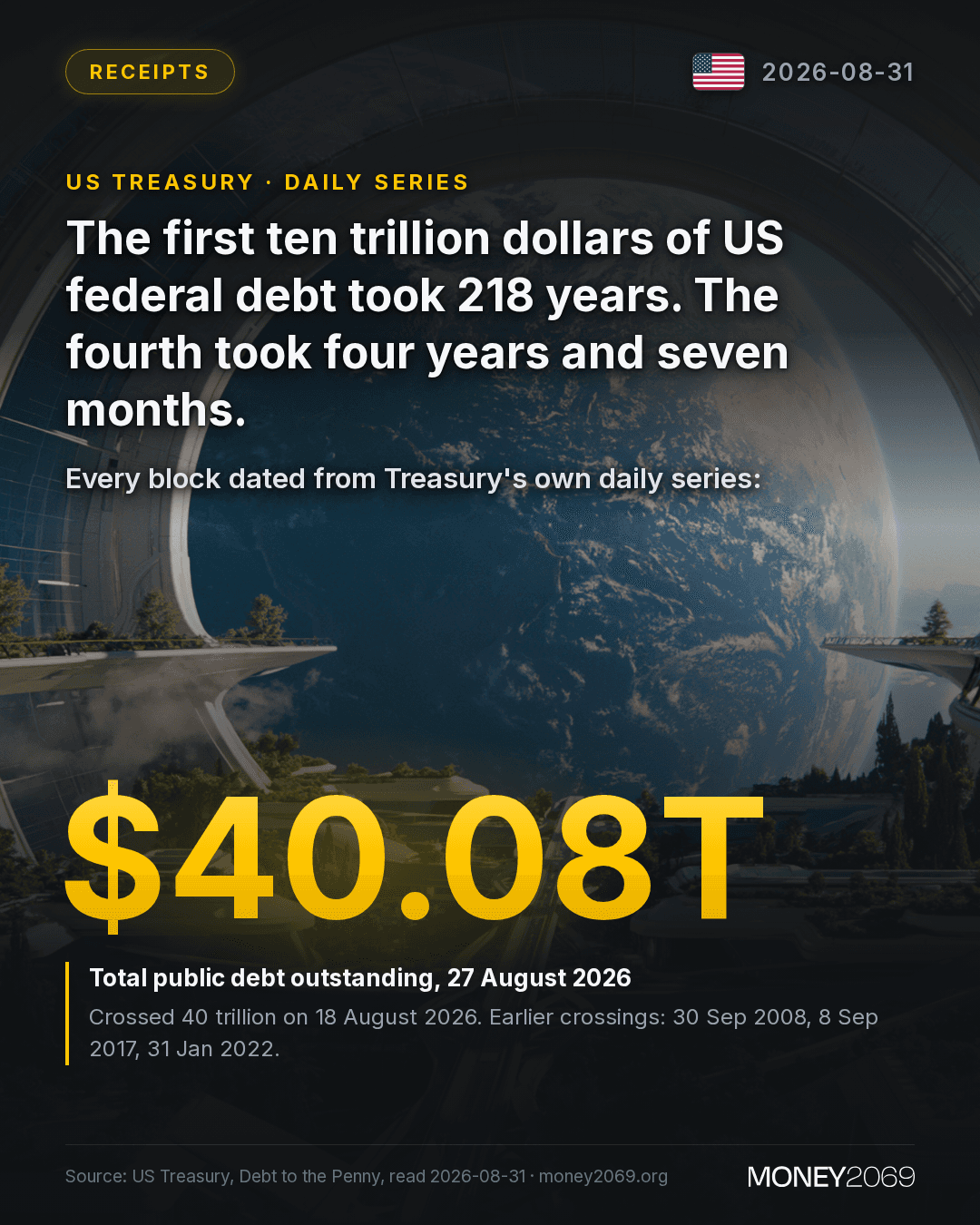
The United States crossed 40 trillion dollars of federal debt on 18 August. On 27 August the figure was 40,077,529,831,942.94. The size is the part everyone quotes. The pace is the part worth looking at. Treasury publishes the debt every business day and the series goes back decades, so each ten trillion dollars can be dated exactly: The first 10 trillion took until 30 September 2008, counting from the first federal debt in 1790. Call it 218 years. The second took until 8 September 2017. Eight years and eleven months. The third took until 31 January 2022. Four years and five months. The fourth took until 18 August 2026. Four years and seven months. So the last two blocks each landed in about half the time the pre-pandemic block took. What has not happened is a second acceleration. The fourth block came no faster than the third, and on that measure the curve has flattened rather than turned down. Worth saying plainly what this number does and does not tell you. Government debt is not the money supply, and a country that borrows in a currency it issues does not run out of it the way a household does. What debt at this pace does affect is the incentive to keep the money supply growing, because it is far easier to service a fixed number with a currency that buys less each year than it is to pay it back with one that holds its value. That second part is the one we measure. We track the money supply of 138 currencies and publish what it does to the money in your pocket, with the series and the window named on every figure. The debt number came from Treasury's own daily series and you can pull the same rows we did. Ours is the other half of the picture, and it is free to check. Pick your currency and run your own year: https://money2069.org
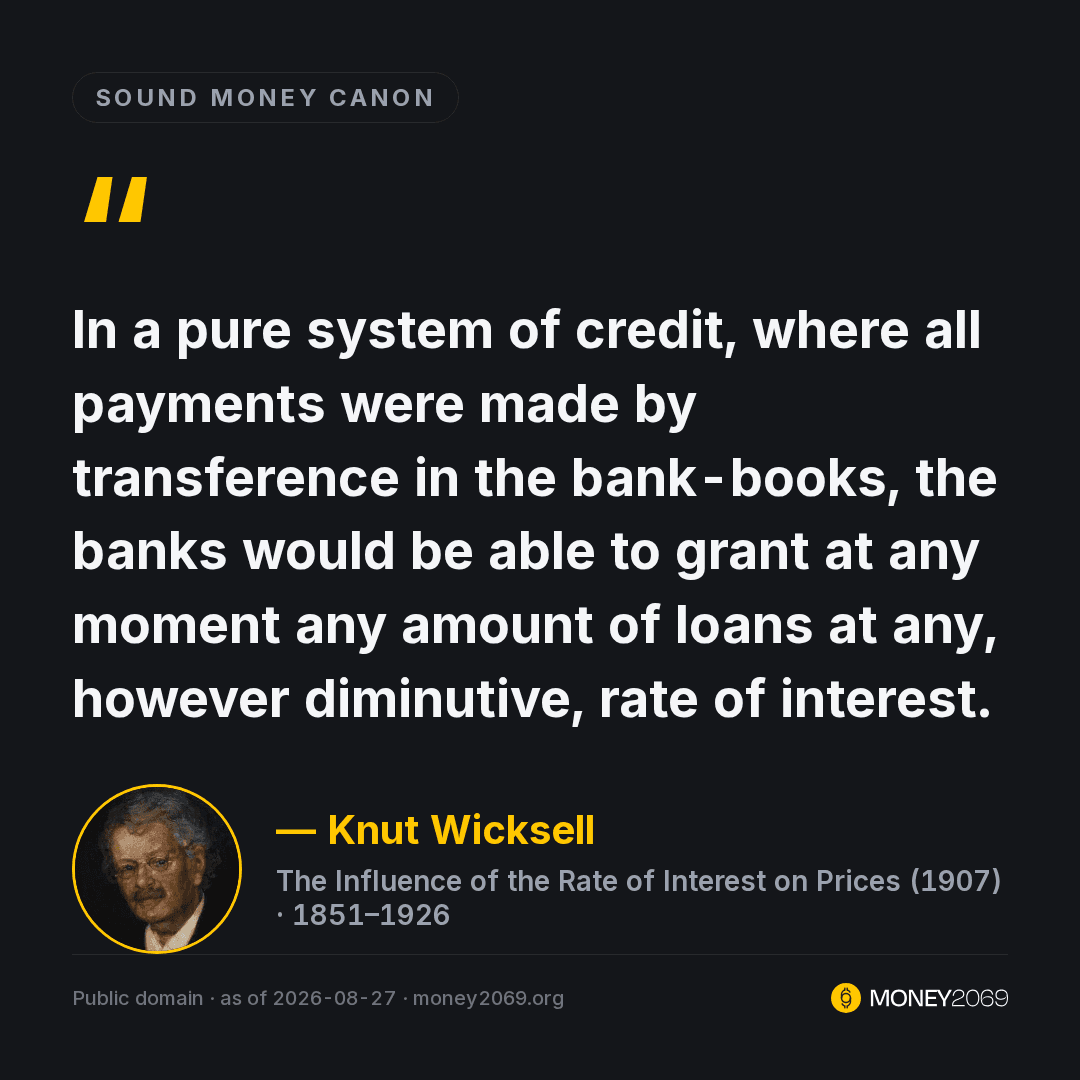
"In a pure system of credit, where all payments were made by transference in the bank-books, the banks would be able to grant at any moment any amount of loans at any, however diminutive, rate of interest." Knut Wicksell wrote that in 1907, in a paper he had read to the British Association the year before. He was describing money as entries moved between bank ledgers, which is close to how most payments settle today. His page in our canon: https://money2069.org/people/knut-wicksell

"Money will not manage itself." Walter Bagehot wrote that in Lombard Street in 1873, describing the Bank of England's money market. This July the Federal Reserve's rate vote split 9 to 3, with three members voting to hike. A century and a half later money is still managed by committee, and we track what the management does to the purchasing power of 138 currencies, every source named: money2069.org/currencies
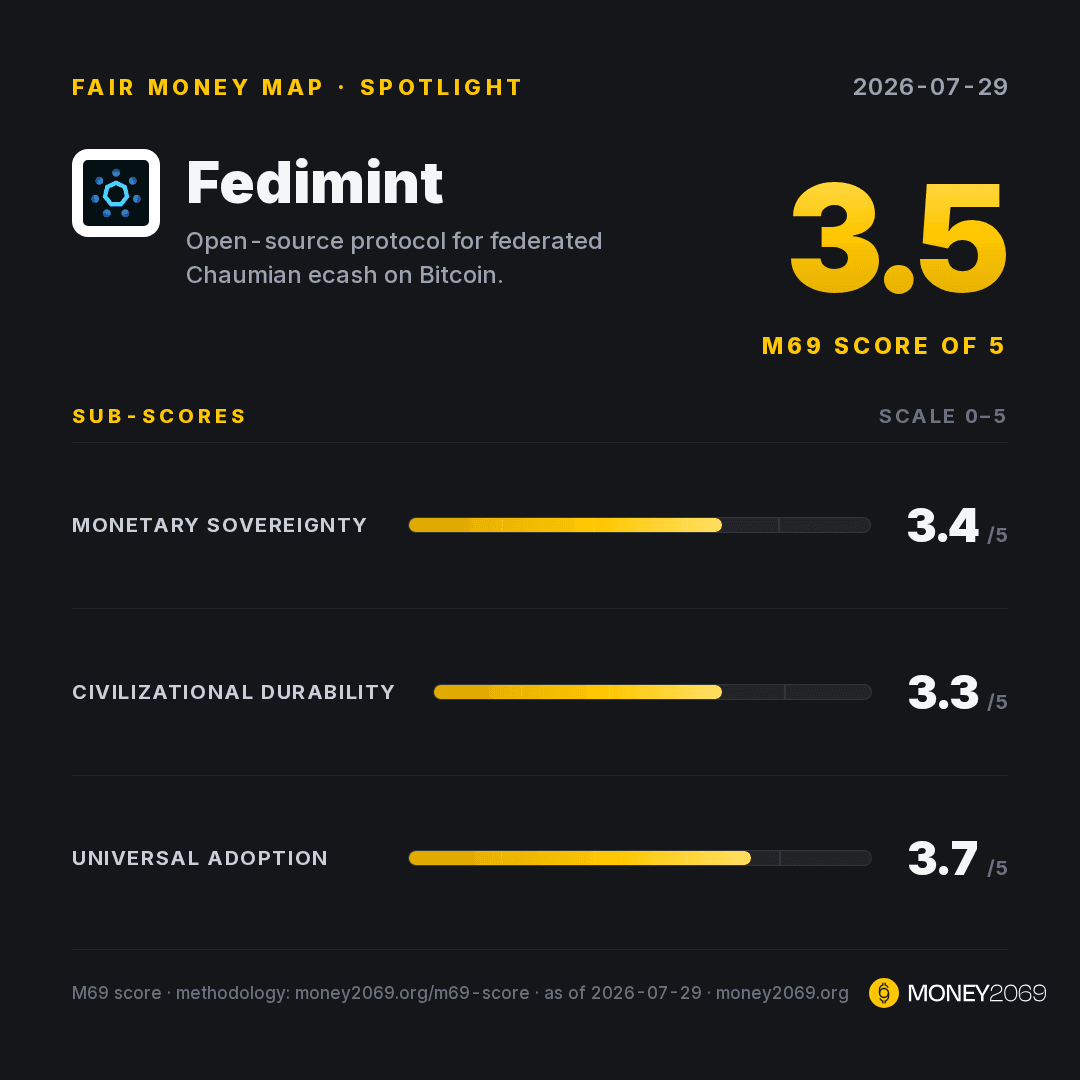
Fedimint (@fedimint) scores 3.5 of 5 on our fair money map. Federated Chaumian ecash on Bitcoin: community guardians custody the sats, users spend private ecash. Strongest pillar: universal adoption at 3.7.
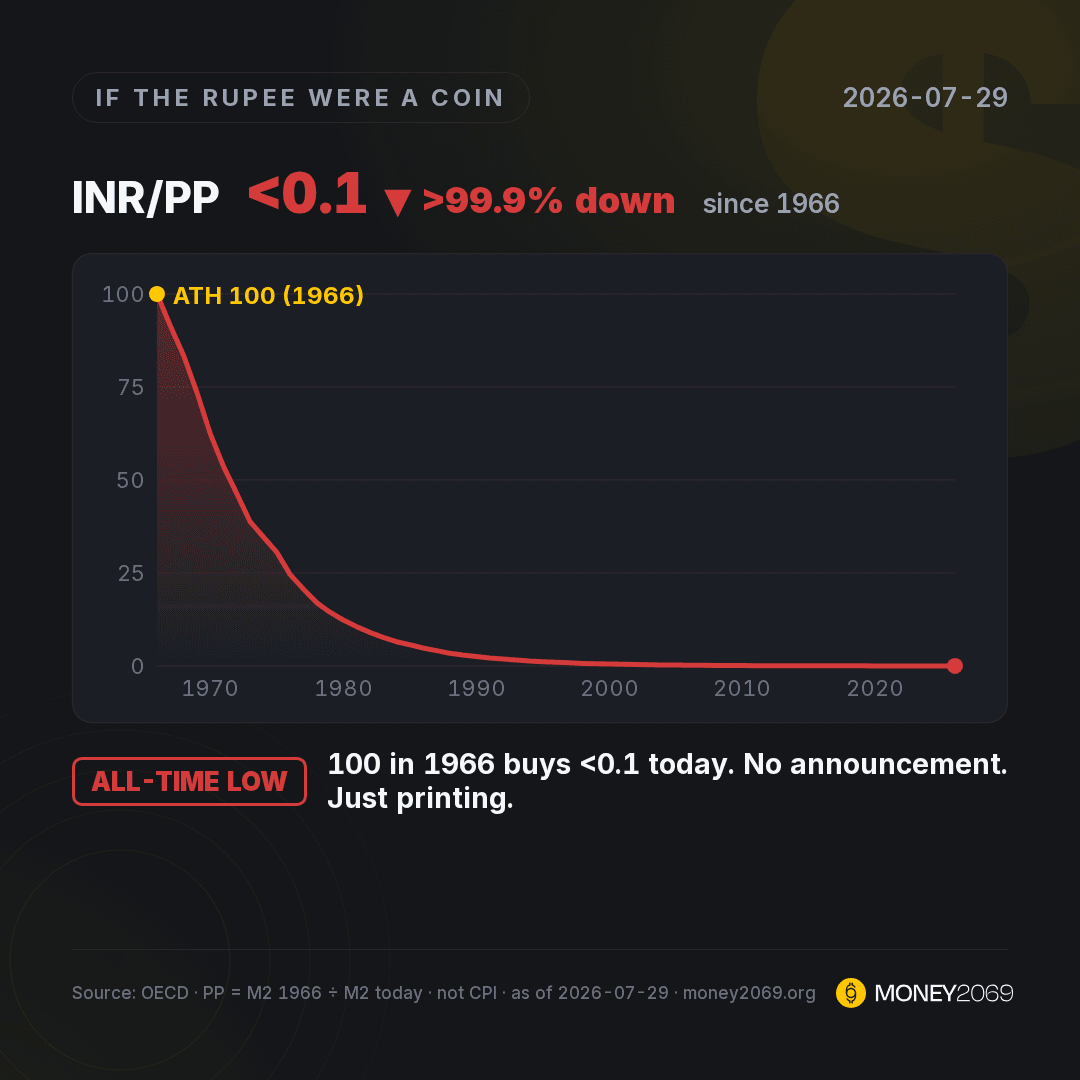
If the rupee were a coin, this is its chart. Purchasing power since 1966, measured by money-supply growth: 100 down to less than 0.1. No rug pull announcement. Just 60 years of printing. The full chart lives in the reply.
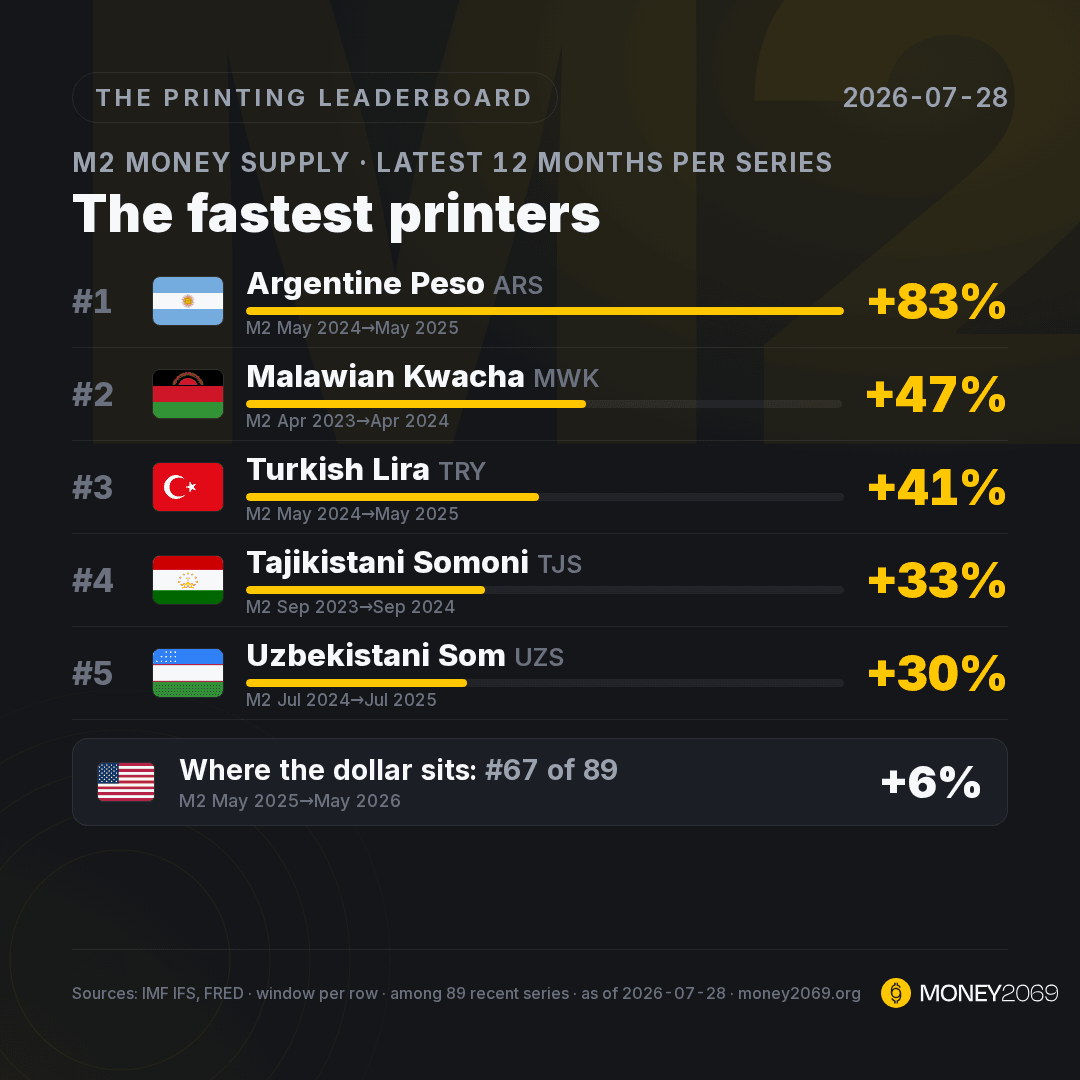
Five money supplies grew 30% or more in their latest reported year. Argentina printed 83% more pesos in the year to May 2025. The dollar sits at 67 of 89 with 6%. Full data in the reply.

"Only money that goes out of date like a newspaper, rots like potatoes, rusts like iron, evaporates like ether…" Silvio Gesell, 1916. Money designed to expire cannot be hoarded, only spent. One Austrian town tried it in 1932. It worked, until it was banned.
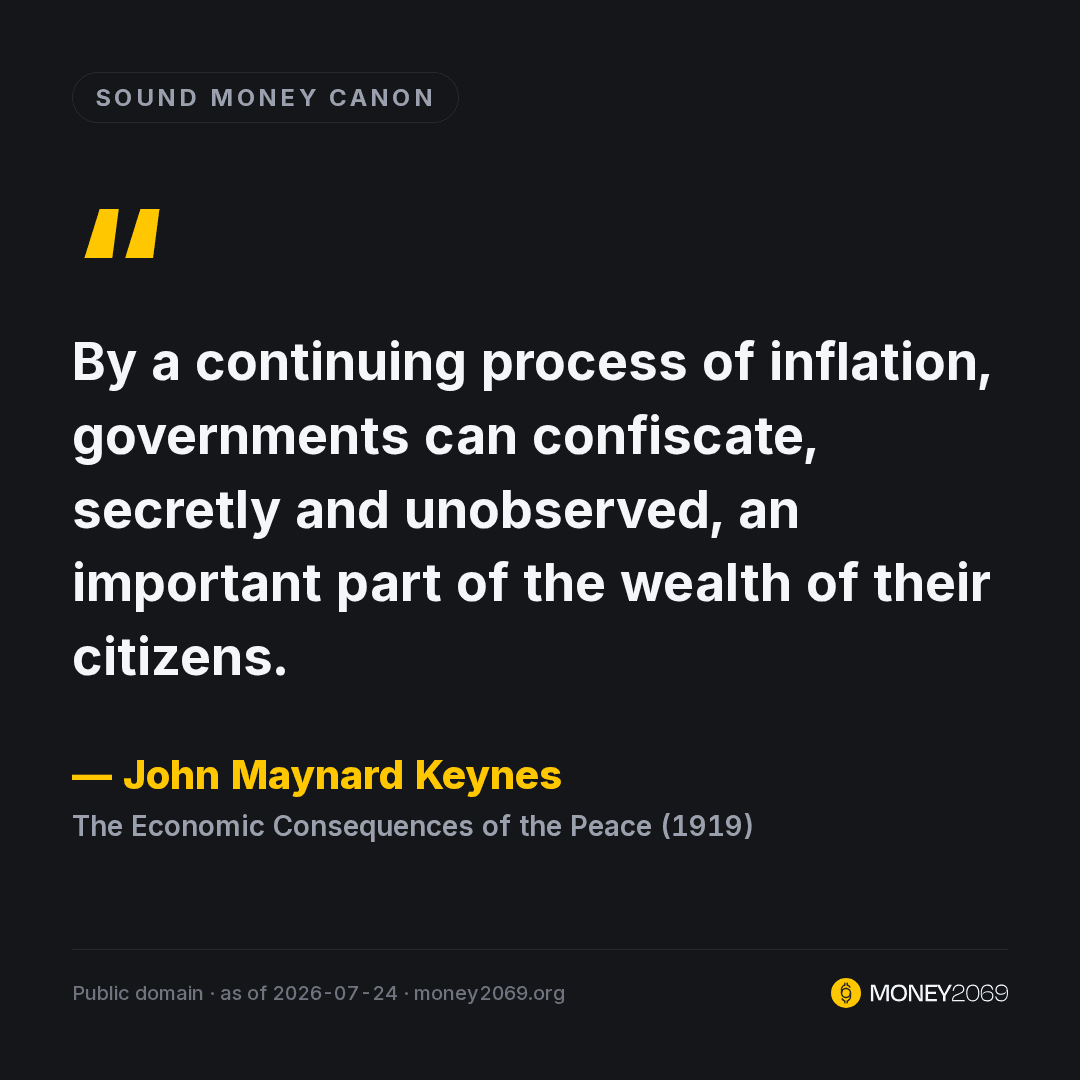
"By a continuing process of inflation, governments can confiscate, secretly and unobserved, an important part of the wealth of their citizens." Keynes wrote that in 1919. The case for printing has always known what printing does. His page in the reply.
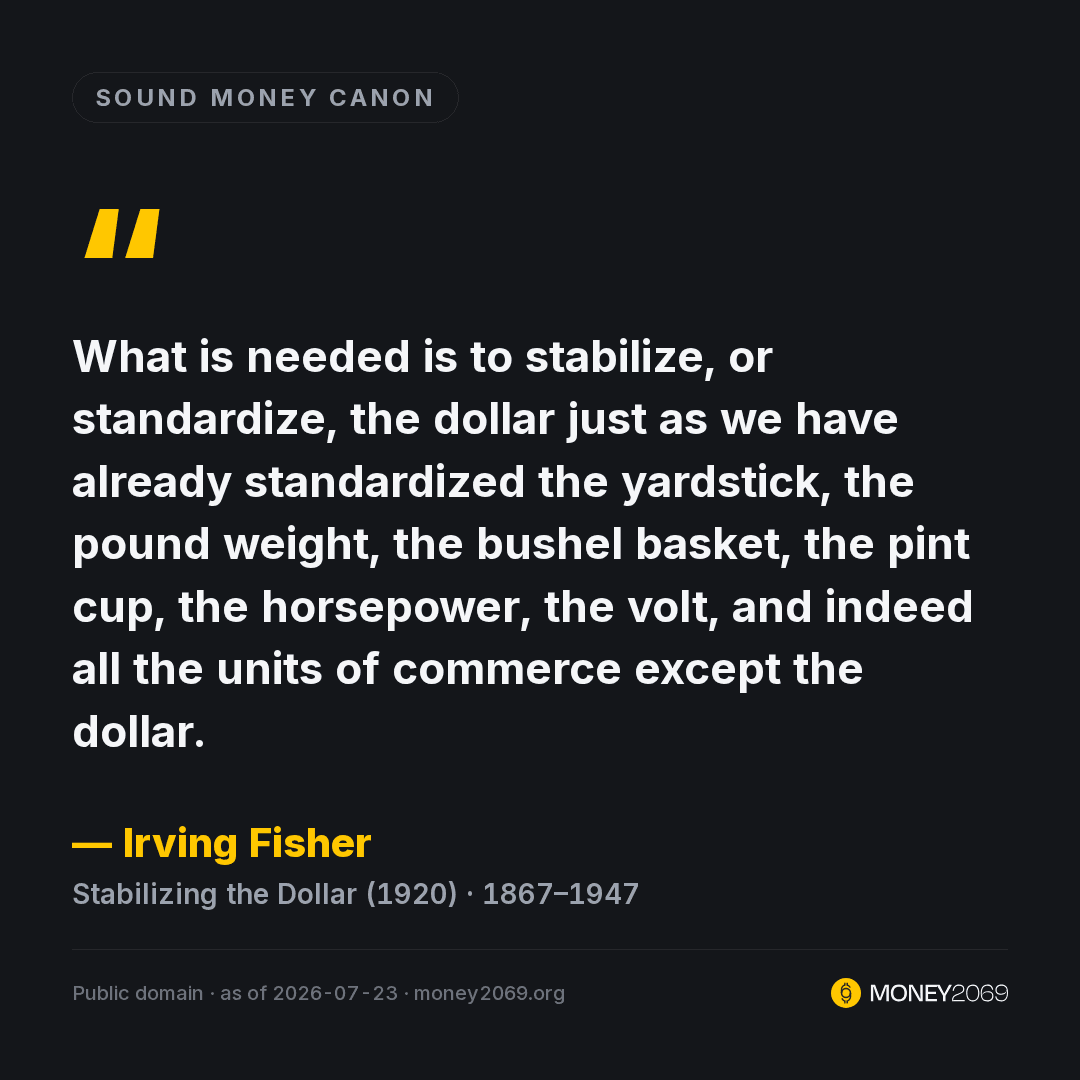
In 1920 Irving Fisher noted we had standardized "all the units of commerce except the dollar." The yardstick, the pound, the volt: all fixed. The unit your salary is paid in: still elastic. A century later that work is still open. His full case in the reply.
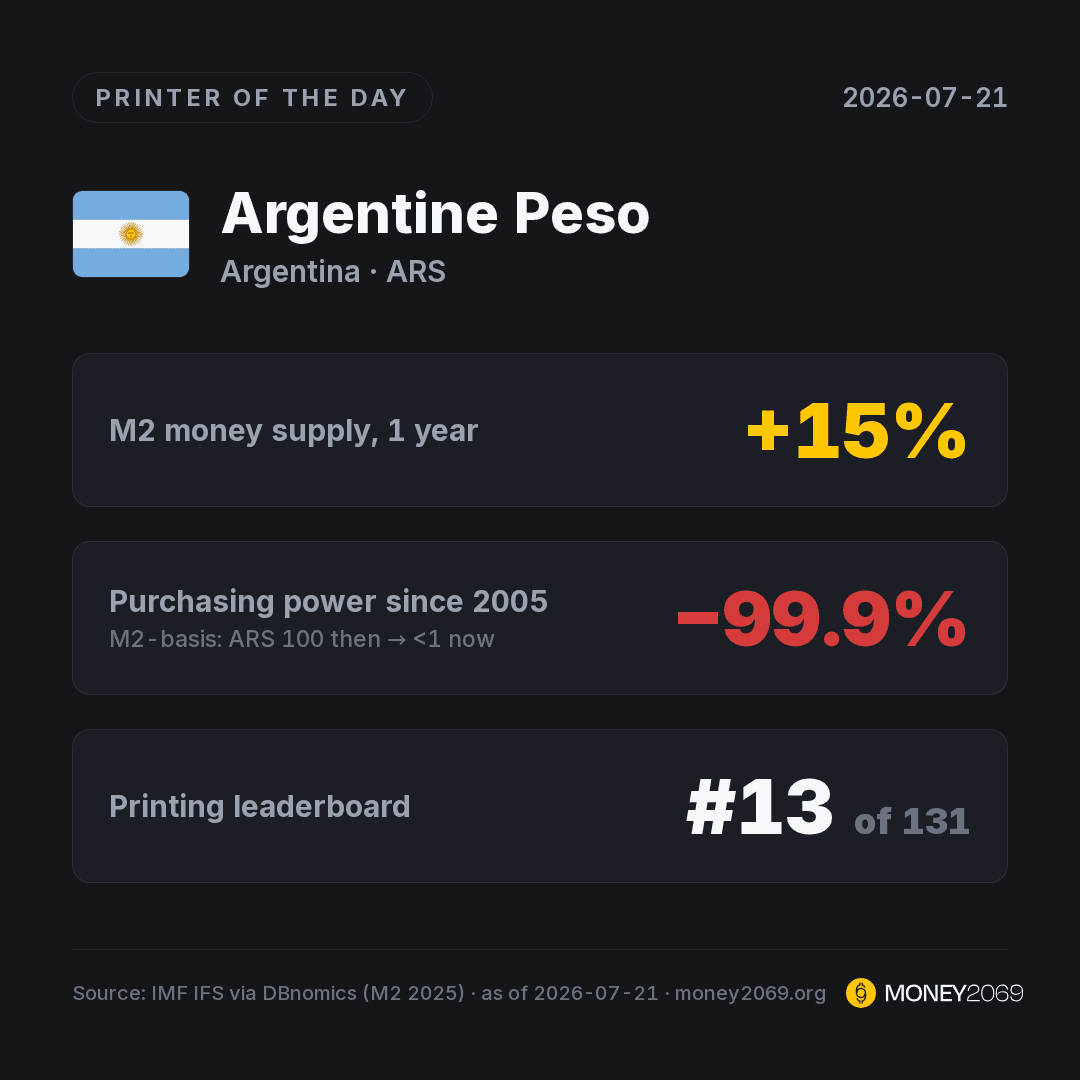
Argentina's money supply grew 15% in the year to May 2025, its latest IMF data. Since 2005 the peso has lost 99.9% of its purchasing power. Check the numbers yourself: money2069.org/currencies/argentine-peso

"Money has not been generated by law. In its origin it is a social, and not a state institution." — Carl Menger, 1892. money2069.org/people/carl-menger
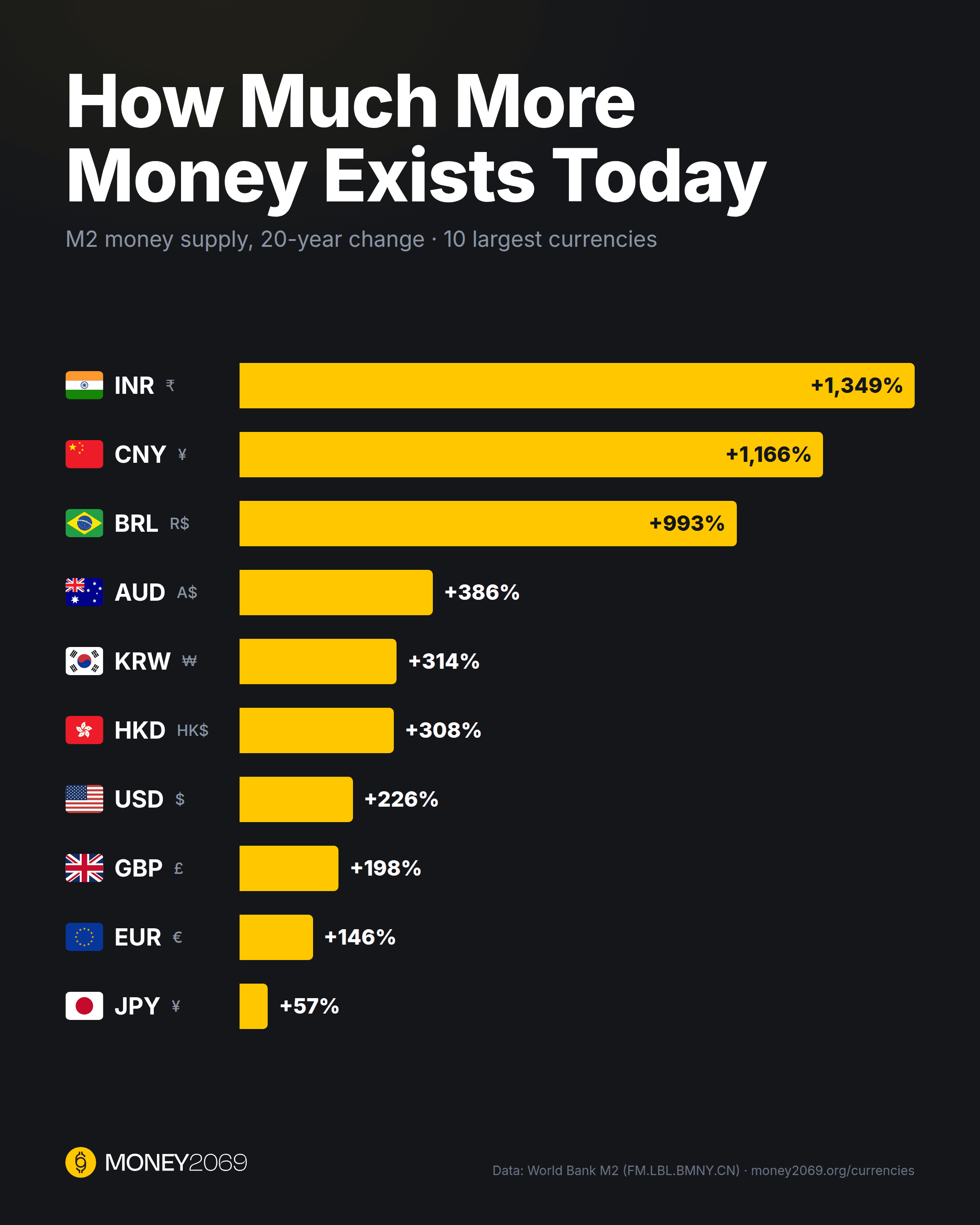
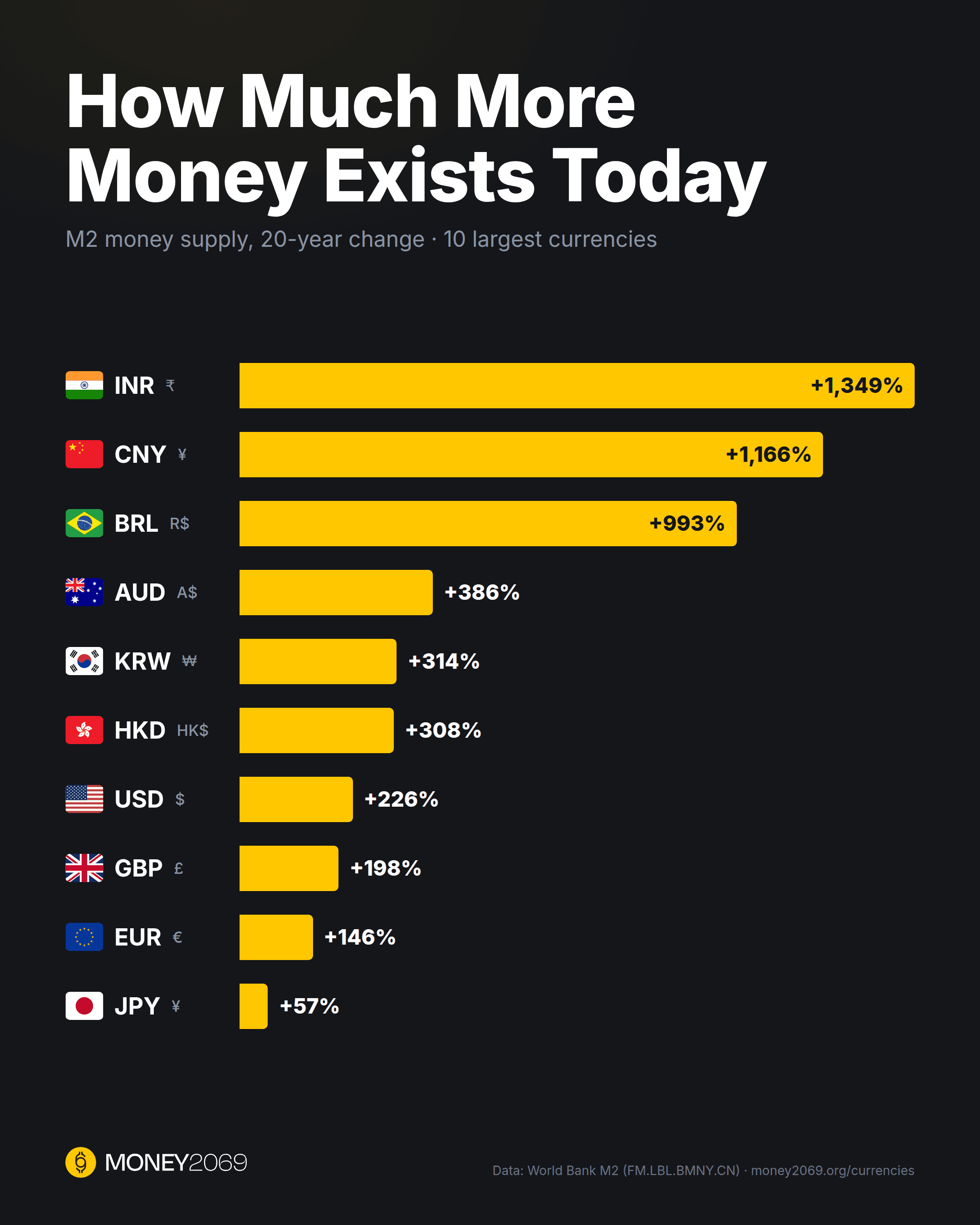
$100 from 2005 buys $31 of the same things today. Measured purely by how much the money supply grew, the US dollar has quietly lost 69% of its purchasing power. Nobody voted on that. Hello, LinkedIn. We are Money2069. We track the money supply of 138 currencies, every day, and publish what the printing does to the money in your pocket. No forecasts, no hot takes, no fear. Receipts. A few of them, straight from our tracker: • Türkiye's lira buys 1% of what it did in 2005. • Argentina's peso has lost 99.9% over the same stretch. • Global M2 money supply now stands at $134.6 trillion, up 313% since 2005. • Even the "strong" currencies printed hard: US M2 up 226% in 20 years, the euro up 146%. Every number we publish carries its source and its as-of date. When we cannot verify a figure, we do not post it. Why this matters: money printing is a quiet tax. When the supply of money grows faster than the economy, purchasing power moves from the people who save it to whoever stands closest to the printer. Most people feel it at the grocery store years before anyone explains it to them. So we built the explanation, in public: • A live debasement tracker for 138 currencies • A calculator that shows what your own money lost since any year you pick • The thinkers who saw it coming, from Carl Menger to the present • Honest, methodology-first ratings of projects trying to build sounder money Do not take our word for any of it. Pick your currency, run your birth year, check our math: money2069.org/currencies We will be posting the receipts here regularly. Follow along.
Nobody stole your savings. They diluted them.