
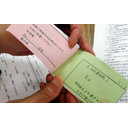
Fureai Kippu
Japanese time-banking system where volunteers earn credits for elder care provision, redeemable for future care.
Fureai Kippu ("caring relationship tickets") is a Japanese time-banking system for eldercare, founded in 1995 by Tsutomu Hotta through the Sawayaka Welfare Foundation. The system enables volunteers to earn credits by providing care services to elderly people, with one hour of service equaling one credit. Credits can be saved for personal future use, transferred to family members in other locations, or redeemed when the participant themselves needs care. Approximately 374 non-profit organizations participate across Japan, coordinated through two electronic clearing houses, serving roughly 70,000 active participants. From an M69 alignment perspective, Fureai Kippu demonstrates exceptional strength in money design fundamentals. Its issuance model is entirely debt-free, directly tied to real economic activity (care labor), and features elastic supply with no hard cap — closely matching the M69 vision. Its unit of account (one hour of care) is fully sovereign and fiat-independent. The system has operated for over 30 years, survived the competitive shock of Japan's Long-Term Care Insurance Act in 2000, and maintains strong organic adoption driven by genuine utility rather than financial incentives. However, the system has significant weaknesses in sovereignty and governance. As an institutional, analog system, it lacks technological enforcement of monetary rules, censorship resistance, or self-custody capabilities. Credits are held custodially by clearing houses. Governance is informal, concentrated in the Sawayaka Foundation, and lacks transparency or formal protections for issuance rules. The system is Japan-only, offers no interoperability with other monetary systems, and has stagnated in growth since 2000. While Fureai Kippu is a pioneering and philosophically aligned monetary experiment, its institutional architecture limits its alignment with the M69 vision of a technologically enforced, sovereign, global monetary system.
Key Findings
M69 Score
Scored against the Money2069 Manifesto — see methodology. Higher = more aligned.
Detailed Rating Breakdown
Issuance Model3x4.4
| Code | Question | Score |
|---|---|---|
| IM-01 | Is issuance permissionless?Semi-open system. Any NPO can join the Fureai Kippu network, but participants must register through a member organization. There are 374 NPOs issuing credits, which is a broad but permissioned set of issuers operating under rule-based criteria. | 3 |
| IM-02 | Is new supply created through debt?No debt mechanism whatsoever. Credits are created purely through the performance of care labor — one hour of care work generates one credit. There is no borrowing, lending, or collateralized minting involved. | 5 |
| IM-03 | Is issuance tied to measurable real-world economic activity?Supply is directly and verifiably linked to real-world care labor. Each credit represents one hour of actual care service provided to an elderly person. The link between issuance and real economic activity is as direct as possible. | 5 |
| IM-04 | Does the issuance model have a supply cap or hard ceiling?Elastic supply with no hard cap. Supply grows and contracts naturally with the volume of care services provided. When more care is given, more credits are created; when credits are redeemed for care, they are consumed. There is no fixed ceiling. | 5 |
| IM-05 | Can supply contract (burn/redemption) as well as expand?Credits are consumed when redeemed for care services, providing a natural contraction mechanism. This is user-initiated (the care recipient uses credits to receive services). Contraction is permissionless but relies on individual redemption decisions. | 4 |
Spending Power Stability2x2.8
| Code | Question | Score |
|---|---|---|
| SPS-01 | What mechanism does the protocol use to target spending power stability?No explicit stability mechanism exists. The system relies on the implicit stability of the time unit — one hour of care is always one hour of care. There is no algorithmic targeting, no rebase, and no protocol-level adjustment. Stability is inherent in the design but not actively managed. | 1 |
| SPS-02 | What basket or benchmark is used to measure spending power?The unit is one hour of care labor — a single-service reference that is entirely non-fiat. It functions as a labor-value standard, not a broad basket of goods and services, but it is independent of any fiat currency or state-issued index. | 4 |
| SPS-03 | How transparent and verifiable is the stability measurement?No published methodology for stability measurement exists. The system does not formally measure or report on purchasing power stability. Records are maintained by individual NPOs and clearing houses but are not publicly auditable. | 2 |
| SPS-04 | What is the protocol's historical deviation from its stability target?Operating since 1995 (30+ years). The time unit has remained stable by definition — one hour of care is always one hour of care. However, the real-world purchasing power of an hour of care may fluctuate. No formal deviation tracking exists, but the system has maintained its core value proposition for three decades. | 4 |
| SPS-05 | Does the protocol distinguish between short-term volatility and long-term purchasing power drift?The time-based unit inherently avoids short-term volatility (no market trading, no price feeds). Long-term purchasing power preservation is a byproduct of the design (an hour of care retains its utility over decades), but neither short-term nor long-term stability is explicitly addressed as a design goal. | 3 |
| SPS-06 | Is the stability mechanism geographically neutral?Japan-only system. The unit of account reflects Japanese care labor costs and demographics. No geographic neutrality in design or ambition. | 2 |
Fiat Independence & Interoperability2x4.0
| Code | Question | Score |
|---|---|---|
| FI-01 | What is the protocol's unit of account?Fully sovereign unit of account: one hour of care service. Defined entirely independently of any fiat currency, state index, or external reference. The unit is self-referential and labor-based. | 5 |
| FI-02 | What is the fiat composition of the protocol's collateral or reserves?Zero fiat or fiat-backed assets in reserves. The system has no reserves in the traditional sense — it is backed entirely by the commitment of participants to provide future care labor. No fiat, no crypto, no commodities. | 5 |
| FI-03 | Does the protocol depend on fiat banking infrastructure to function?Core system operates independently of banking. However, most current implementations use a hybrid model where small yen co-payments supplement time credits to cover administrative costs. Banking is supplementary, not essential. | 4 |
| FI-04 | Are the protocol's price feeds and oracles fiat-denominated?No price feeds or oracles are needed. The unit is self-referential (1 hour = 1 hour). There is no external price discovery or denomination requirement. | 5 |
| FI-05 | What happens to the protocol if the primary fiat currency it references collapses or depegs?Structurally immune. The system has no fiat reference currency. If the Japanese yen collapsed, Fureai Kippu would continue to function since its value derives from care labor, not monetary denomination. | 5 |
| FI-06 | Does the project have a credible transition path from fiat-dominated adoption to fiat-independent operation?Already fiat-independent by design. No transition needed. The system was conceived and has always operated as a non-fiat time-based currency. The yen co-payments in some branches are supplementary, not structural. | 5 |
| FI-07 | Can local or sectoral currencies be denominated in or settle against this currency?The 374 organizations operate semi-independently within the system, and two clearing houses enable cross-organization settlement. However, no distinct local currencies exist within the framework — all use the same hour-of-care unit. The architecture could theoretically support local expressions but none have been created. | 3 |
| FI-08 | Does the protocol define open standards for interoperability with other monetary systems?Closed system with no interoperability standards. Fureai Kippu does not define any open standard for exchange with other currencies, time banks, or monetary systems. It operates in isolation from other monetary networks. | 1 |
Traction2x3.5
| Code | Question | Score |
|---|---|---|
| TR-01 | Is the project still active?Partially active. Fureai Kippu continues to operate approximately 400 branches across Japan, but scope and participation have been reduced since 2000 when Japan's Long-Term Care Insurance Act created government-funded alternatives. The system still functions but at reduced capacity compared to its peak. | 3 |
| TR-02 | How long has the project been in existence?30+ years of continuous existence since 1995 (with roots in the 1973 Volunteer Labour Bank). One of the longest-running community currency systems in the world. | 5 |
| TR-03 | How many active users does the project have?Approximately 70,000 active participants across the network. The largest member organization, Nippon Active Life Club, has 37,500 members alone with 137 regional centres. Around 100,000 people benefit from services. | 3 |
| TR-04 | How many businesses or organizations accept the project's currency?374 non-profit organizations issue and accept Fureai Kippu across Japan. These are not traditional businesses but care-providing NPOs. Each organization includes 200-300 participants. This falls in the 100-1,000 range. | 3 |
| TR-05 | Is the currency used as a unit of account?Within the Fureai Kippu network, services are natively denominated in hours of care. Participants think in terms of hours rather than yen equivalents. However, outside the care network, the yen dominates. The currency functions as a unit of account within its defined community. | 4 |
| TR-06 | Is the founder or core team still actively working on the project?Tsutomu Hotta founded the Sawayaka Welfare Foundation in 1991. The foundation continues to exist and coordinate but recent evidence of active leadership is limited. The project runs largely on community and organizational momentum with limited central leadership visibility. | 3 |
| TR-07 | What partner organizations or institutions support or integrate the project?374+ non-profit organizations, local government-supported branches, two major clearing house operators (including Nippon Active Life Club), the Sawayaka Welfare Foundation, and various local government bodies. Well over 10 independent partner organizations across multiple sectors. | 5 |
| TR-08 | Is the project covered or recognized by credible external sources?Extensively covered in peer-reviewed academic research including the International Journal of Community Currency Research (Hayashi 2012), Bernard Lietaer's research, and cited in international policy discussions. Referenced by the UK and other countries when developing their own time-banking programs. | 5 |
| TR-09 | Is adoption organic — not dependent on subsidies, incentives, or mandates?Entirely organic. The system operates without government subsidies or financial incentives. Research shows only 9% of volunteers cite personal retirement security as motivation; the vast majority participate altruistically. Users choose Fureai Kippu out of genuine care and community values, not financial reward. | 5 |
| TR-10 | What is the growth trend over the past 12 months?Declining and stagnating since 2000. The Long-Term Care Insurance Act has supplanted much of the system's role. While some branches continue to operate, the overall trend over the past two decades is one of gradual contraction and reduced relevance. | 2 |
| TR-11 | Does the project have a coherent narrative and cultural identity that drives long-term commitment?Strong founding narrative rooted in Japanese cultural values of reciprocity (on, giri), care for elders, and community mutual aid. The name itself ("caring relationship ticket") encodes the mission. Participants identify with values beyond financial incentives. The elderly prefer Fureai Kippu workers over yen-paid workers because of the relationship quality. Cultural identity is genuine but limited to the care sector in Japan. | 4 |
Sovereignty1.5
| Code | Question | Score |
|---|---|---|
| SO-01 | Can any single entity shut down the project?The Sawayaka Welfare Foundation loosely coordinates the network, but the two centralized clearing houses represent critical infrastructure. The Japanese government could also regulate or shut down the system. While 374 independent NPOs provide some resilience, the clearing houses are single points of failure that a single entity (government or clearing house operator) could disable. | 2 |
| SO-02 | Is the project's core infrastructure permissionless and self-hostable?Fully proprietary institutional system. There is no open-source code, no public protocol specification, and no way to independently run the infrastructure. The clearing houses are operated by specific NPOs with no documentation for replication. | 1 |
| SO-03 | Is the project subject to the jurisdiction of a single nation-state?Fully dependent on Japan's legal framework. All 374 organizations, both clearing houses, and the Sawayaka Foundation operate exclusively under Japanese law. The system cannot operate without Japan's regulatory permission. | 1 |
| SO-04 | Does the project control or custody user funds?Fully custodial. Credits are held in centralized electronic clearing house databases. Users have no direct control over their credit balances and cannot self-custody. If a clearing house loses data or refuses service, users lose their credits. | 1 |
| SO-05 | Is the project resilient to key-person risk?Tsutomu Hotta is the founding figure, but the network of 374 independent NPOs distributes operational capacity broadly. The clearing houses are operated by specific organizations (Nippon Active Life Club and others). Moderate key-person risk: the system could continue without any single person, but institutional knowledge is concentrated. | 3 |
| SO-06 | Does the project depend on any third-party service that could be revoked?Critical dependency on the two electronic clearing houses. If either clearing house ceased operations, credit transfers between organizations would fail. No documented migration paths or alternatives exist. Individual NPOs could continue locally but the national network would fragment. | 2 |
| SO-07 | Can the project be censored — can specific users or transactions be blocked?Individual NPOs and clearing houses have the ability to block participants or refuse transactions. There is no technical resistance to censorship. However, there is no evidence that censorship has been exercised in practice. Criteria for exclusion, if any, are not publicly documented. | 2 |
| SO-08 | Does the protocol protect transaction privacy as a monetary right?Limited privacy. The system requires participant identification for care coordination (both providers and recipients). NPOs and clearing houses maintain transaction records. However, the system operates under Japan's personal data protection laws (APPI), and data is not publicly visible. Privacy is managed institutionally, not architecturally. | 2 |
| SO-09 | Does the technology enforce the project's monetary rules such that governance cannot silently override them?No technological enforcement of monetary rules. The system's rules (1 hour = 1 credit, transferability, redemption) are policy documents and organizational conventions. Clearing house operators or the Sawayaka Foundation could theoretically change rules at any time without technical constraints. There is no code, no smart contracts, no immutable ledger. | 1 |
Governance2.0
| Code | Question | Score |
|---|---|---|
| GO-01 | How are decisions about the project made?Governance is informal. The Sawayaka Welfare Foundation provides loose coordination, but decision-making processes are not publicly documented. Individual NPOs make operational decisions locally. System-wide changes appear to be made by the Foundation or clearing house operators without a formal, publicly documented process. | 2 |
| GO-02 | Who has voting or decision-making power, and how is that power distributed?Decision power is held by the Sawayaka Welfare Foundation board and clearing house operators. While 374 NPOs have operational autonomy, system-wide monetary decisions are centralized. No voting mechanism exists for participants. This resembles a small foundation board model. | 2 |
| GO-03 | Is the governance process — and the monetary mechanism itself — transparent and publicly auditable?Limited transparency. The basic concept is publicly described, but governance deliberations, decision records, financial reports, and operational data are not publicly available in English or widely in Japanese. The monetary mechanism is understandable in principle but not auditable in practice. | 2 |
| GO-04 | Can governance be captured by a small group or hostile actor?Governance is already concentrated in the Sawayaka Foundation and clearing house operators. The system is effectively controlled by a small group of insiders (foundation leadership). However, the distributed nature of 374 independent NPOs provides some resistance to hostile takeover — a capture of the Foundation would not automatically capture all branches. | 2 |
| GO-05 | How are upgrades and changes to the protocol or project proposed and executed?No formal upgrade process documented. Changes to the system's rules, technology, or structure appear to be made by the Foundation or clearing house operators. No evidence of community input processes or formal proposal mechanisms. | 2 |
| GO-06 | Is there a separation between governance over monetary policy and governance over operational decisions?No formal separation. The same entities (Foundation, clearing house operators) make both monetary policy decisions (credit rules, transfer mechanisms) and operational decisions. No structural distinction between the two. | 2 |
| GO-07 | Does the project have a constitution, charter, or set of immutable principles?The Sawayaka Welfare Foundation has a stated mission to create a "Fureai society" based on mutual care and reciprocity. The founding principles (labor = value, care = currency, reciprocity over charity) serve as guiding values. However, these are not formally protected from governance override — they are vision statements, not constitutional constraints. | 3 |
| GO-08 | Can the project's issuance rules be changed, and are monetary policy changes subject to stronger constraints than operational changes?No formal protection of issuance rules. The Foundation or clearing house operators could theoretically change the fundamental rule (1 hour = 1 credit) or modify transfer/redemption rules without structural constraints. There is no documented distinction between the difficulty of changing monetary vs. operational rules. | 2 |
Resilience3.1
| Code | Question | Score |
|---|---|---|
| RE-01 | Has the project survived a major crisis or adversarial event?Survived the introduction of Japan's Long-Term Care Insurance Act in 2000, which created government-funded competition and significantly reduced the system's relevance. The system contracted but did not collapse. Also survived 30+ years spanning multiple Japanese economic crises (the "Lost Decades," deflation, 2008 financial crisis, COVID-19) without mechanism failure. Core mechanism held despite contraction. | 4 |
| RE-02 | Does the project have redundancy in its critical infrastructure?Two clearing houses provide partial redundancy for inter-organizational transfers. 374 independent NPOs can continue operating locally even if the network fails. However, the clearing houses themselves are single points of failure for the national network. No documented failover procedures. | 3 |
| RE-03 | Can the project recover from a catastrophic failure?No documented disaster recovery plan. Recovery would depend on specific individuals at the Foundation and clearing house operators. However, the simplicity of the concept (1 hour = 1 credit) means the system could be rebuilt by any competent team, even if specific institutional knowledge were lost. Actual account data recovery would be problematic. | 2 |
| RE-04 | Is the project's design simple enough to be maintained and understood long-term?Extremely simple and elegant. The core mechanism (1 hour of care = 1 credit) can be explained in one sentence. Any community could understand and participate immediately. This is one of the simplest monetary designs in existence. | 5 |
| RE-05 | Is the project dependent on a specific technology that could become obsolete?Technology-agnostic design. The core concept (time banking for care) can be implemented on paper, spreadsheets, databases, or any future technology. The current electronic clearing houses could be migrated to any platform. The concept is not tied to any specific technology stack. | 4 |
| RE-06 | How does the project handle economic stress (bank runs, liquidity crises, collateral crashes, inflation/deflation shocks)?The time-based unit is structurally immune to inflation, deflation, and collateral crashes because there is no collateral, no financial assets, and no fiat peg. An hour of care retains its utility regardless of macroeconomic conditions. The system has operated through Japan's prolonged deflation and multiple economic crises without mechanism disruption. No "bank run" equivalent exists since credits represent future care obligations, not financial claims. | 4 |
| RE-07 | Does the project have sustainable funding for long-term maintenance?Funded through NPO membership fees, small yen co-payments from care recipients, and organizational budgets. No venture capital, no token treasury, no protocol fees. The model is modest but has sustained operations for 30+ years. Funding is continuous but dependent on NPO viability and volunteerism. | 3 |
| RE-08 | Can the system operate across extreme latency, disconnected networks, and multi-century timescales?The concept is simple enough to operate on paper in disconnected environments. It does not require real-time connectivity or any specific technology. It could theoretically be reimplemented across platforms over decades. However, it was not designed for high-latency or disconnected operation — the electronic clearing houses assume connectivity. Adaptation would be required but straightforward. | 3 |
| RE-09 | Is the system designed for a world where AI agents are primary economic actors?The system requires human identity, human care labor, and human relationships. AI agents cannot provide eldercare in the Fureai Kippu model. The system is fundamentally designed for human-to-human interaction and is incompatible with machine participation by design. | 1 |
Inclusivity3.7
| Code | Question | Score |
|---|---|---|
| IN-01 | Can anyone in the world participate regardless of nationality, wealth, or status?Restricted to Japan. Within Japan, participation requires joining a member NPO, which involves local presence and organizational registration. No nationality, wealth, or credit-check barriers within Japan, but geographic restriction to Japan is a significant limitation. Some populations (non-Japanese speakers, people in areas without branches) are effectively excluded. | 2 |
| IN-02 | What is the minimum cost to start using the project?Zero monetary cost to begin participating as a volunteer. The only requirement is time and willingness to provide care. No minimum balance, no fees, no technology requirements beyond joining a local NPO. Some care recipients may pay small yen co-payments for administrative costs, but these are minimal. | 5 |
| IN-03 | Does the project actively serve underbanked or financially excluded populations?Not designed exclusively for underbanked populations, but serves elderly Japanese who may have limited access to formal care services. The time-credit mechanism specifically addresses elderly who cannot afford market-rate care and those in areas underserved by the government system. Documented adoption among elderly populations who are functionally excluded from adequate care. | 4 |
| IN-04 | Does the project distribute economic benefits — including seigniorage — broadly, or concentrate them among insiders?All economic benefits flow directly to participants. There is no seigniorage extraction, no insider advantage, no VC allocation, and no founder enrichment. Credits are created by and for care providers, and consumed by care recipients. The Foundation and clearing houses are non-profit organizations. No economic value is extracted from participants. | 5 |
| IN-05 | Does the project treat all participants equally under the same rules?Identical rules for every participant: one hour of care equals one credit, regardless of the participant's status, wealth, or role. No tiered access, no preferential rates, no special privileges. The time-based unit is inherently egalitarian — a doctor's hour and a homemaker's hour are valued equally. Minor operational differences exist between branches. | 4 |
| IN-06 | Does the project require identity documentation or surveillance to participate?Participants must be identified to their local NPO for care coordination (both caregivers and care recipients need to be known for safety and logistics). This creates a data relationship with the operator. However, government-issued ID is likely required for care provision to vulnerable elderly people. The identification serves care quality and safety purposes, not financial surveillance. | 2 |
| IN-07 | Does the project have mechanisms to prevent wealth concentration over time?The time-based unit inherently prevents concentration. Everyone's hour is worth the same, and credits have limited utility (they can only be redeemed for care services, not converted to other forms of wealth). There is no compound yield, no staking, and no mechanism for accumulation beyond personal care needs. This is a structurally anti-concentrative design. | 5 |
Frequently Asked Questions
What is Fureai Kippu and what problem does it solve?
Fureai Kippu ("caring relationship tickets") is a Japanese time-banking system for eldercare, founded in 1995 by Tsutomu Hotta through the Sawayaka Welfare Foundation. The system enables volunteers to earn credits by providing care services to elderly people, with one hour of service equaling one credit.
How is money created in Fureai Kippu?
Semi-open system. Any NPO can join the Fureai Kippu network, but participants must register through a member organization. There are 374 NPOs issuing credits, which is a broad but permissioned set of issuers operating under rule-based criteria.
How does Fureai Kippu maintain stable spending power?
No explicit stability mechanism exists. The system relies on the implicit stability of the time unit — one hour of care is always one hour of care. There is no algorithmic targeting, no rebase, and no protocol-level adjustment.
Is Fureai Kippu independent from fiat currencies?
Fully sovereign unit of account: one hour of care service. Defined entirely independently of any fiat currency, state index, or external reference. The unit is self-referential and labor-based.
Who controls Fureai Kippu and can it be shut down?
The Sawayaka Welfare Foundation loosely coordinates the network, but the two centralized clearing houses represent critical infrastructure. The Japanese government could also regulate or shut down the system. While 374 independent NPOs provide some resilience, the clearing houses are single points of failure that a single entity (government or clearing house operator) could disable.
How widely adopted is Fureai Kippu today?
Approximately 70,000 active participants across the network. The largest member organization, Nippon Active Life Club, has 37,500 members alone with 137 regional centres. Around 100,000 people benefit from services.
Is Fureai Kippu still active and growing?
Partially active. Fureai Kippu continues to operate approximately 400 branches across Japan, but scope and participation have been reduced since 2000 when Japan's Long-Term Care Insurance Act created government-funded alternatives. The system still functions but at reduced capacity compared to its peak.
What are the main risks or weaknesses of Fureai Kippu?
Weakest category: Sovereignty (1.5): This is an analog institutional system with no technological enforcement. Fully custodial (organizations hold accounts), no censorship resistance, no self-custody, single point of failure in the Sawayaka Welfare Foundation. Any coordinator can freeze or alter balances.
What makes Fureai Kippu unique from an M69 perspective?
Strongest category: Issuance Model (4.4): Debt-free, labor-backed, elastic supply with no cap. 1 hour of care = 1 Fureai Kippu credit. Supply is tied directly to real economic activity (eldercare services). This is textbook M69-aligned issuance — money created through productive human labor with no debt, no collateral, and no insider advantage.
How is Fureai Kippu's M69 Score calculated?
Fureai Kippu scores 3.4/5.0 overall. Pillar scores: Monetary Sovereignty 3.8, Civilizational Durability 2.2, Universal Adoption 3.6. Strongest: Issuance Model (4.4). Weakest: Sovereignty (1.5).